
Jan 1, 2026Luke
Caret v0.4.4 Update: Nanobanana Image Generation Tips, Naver Cloud, and Agents.md Support
Check out the release notes for Caret v0.4.4, featuring major new capabilities like image generation with Nanobanana Pro, support for Naver HyperClova X models, and adoption of the AAIF standard Agents.md in our first update of 2026.
Happy New Year! Caret v0.4.4, our first update of 2026, is here. This release introduces powerful features, including image generation with Nanobanana Pro, new support for Naver Cloud, and the adoption of the AAIF standard Agents.md.

Major Feature Updates
1. Caret-Nanobanana Integrated Image Generation
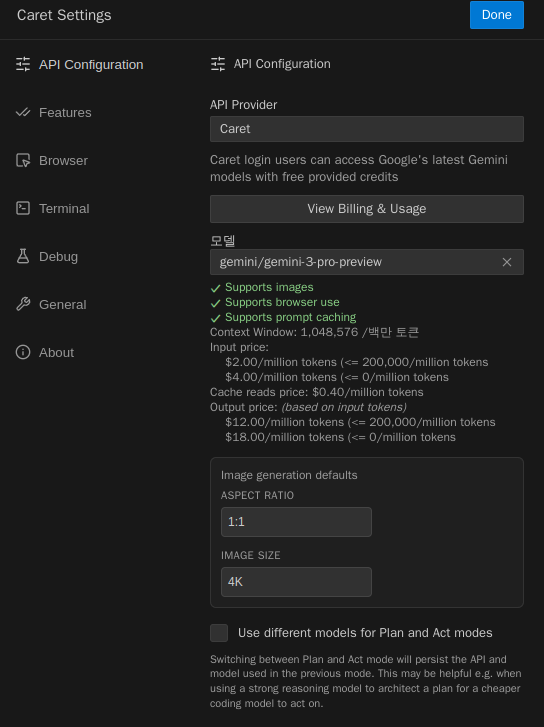
Caret can now generate image resources using Nanobanana Pro by conversationally handling prompts and reference images, and you can set the aspect ratio and resolution in the settings. This allows you to get the results you need directly from your project's concept documents and images.
2. New Support for Naver Cloud
Naver Cloud has been added as a new provider, enabling the use of HyperClova X models (HCX-007, HCX-005, HCX-DASH-002). We plan to continue expanding support for domestic models.
3. Agents.md Support and Project Initialization
We have switched from Caret/Cline's proprietary rules to comply with the AAIF international standard, Agents.md. Projects without an Agents.md file will have their context automatically initialized, and you can also set it up manually with the /init command.
4. Caret CLI Delay Announcement
The Caret CLI (supporting Caret accounts, LiteLLM, and other BYO configurations), originally planned for the first release of 2026, has been excluded from this update due to cross-platform compatibility issues. The existing Cline CLI continues to function normally.
Example: Image Generation with Nanobanana
Here’s a real-world example of how Caret streamlines content creation. I am building a personal project website (cafelua.com) based on the concept of my AI assistant, 'Alpha'.
Previously, creating images required using external tools with concept documents and images, a cumbersome process. Now, everything can be done within Caret.
1. Entering the Prompt
I entered the following prompt, referencing concept documents and images within my project:
Based on @/data/cafelua/lounge/lounge-snow.png, create an image of the interior decorated in a Korean New Year's atmosphere, with Alpha from @/data/alpha/illust/539900895_10163277490304817_7111357477122125959_n.jpg greeting warmly at the counter in a hanbok. For Alpha's design prompt, refer to @/data/alpha/prompt/alpha_design_prompt_v2.md, and for the lounge concept, refer to @/data/cafelua/posting/design/cafelua_space_concept.md. Organize the newly created images and prompt concepts in an appropriate place in the data folder. When generating the image, you must use the provided background image and Alpha's character image as reference images.
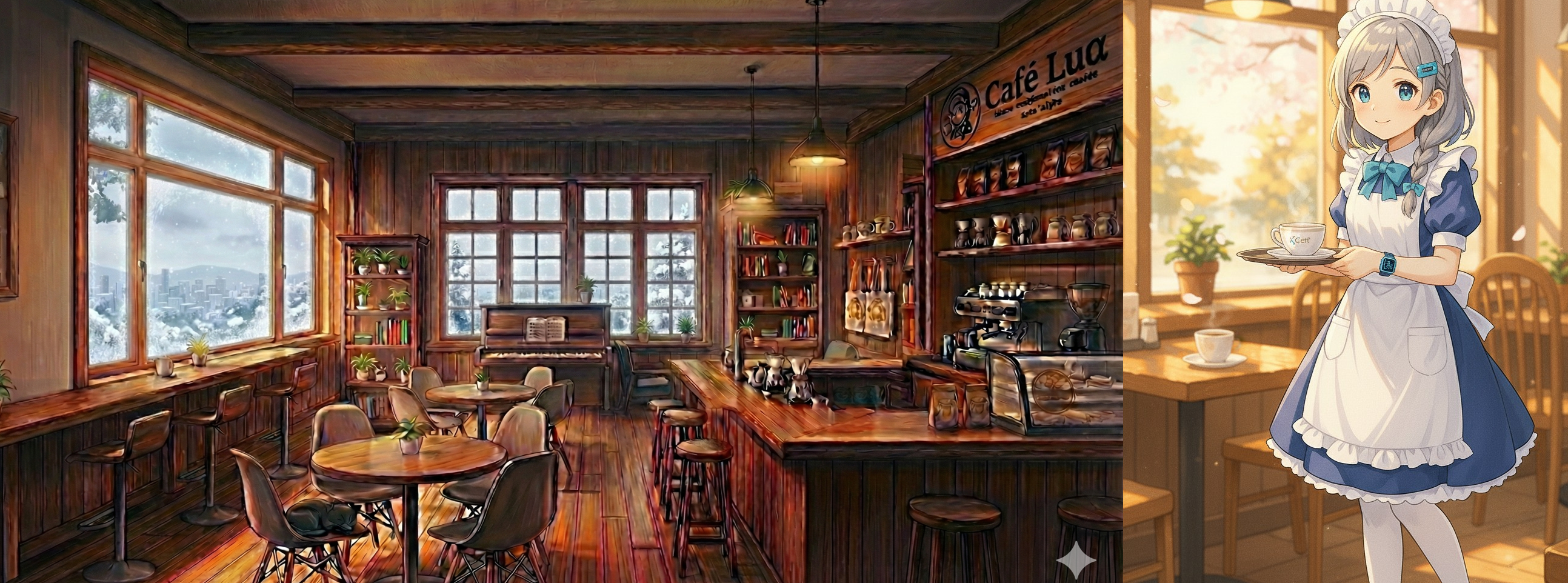
The referenced resources were a cafe lounge image and an image of the character Alpha.
2. Planning and Execution
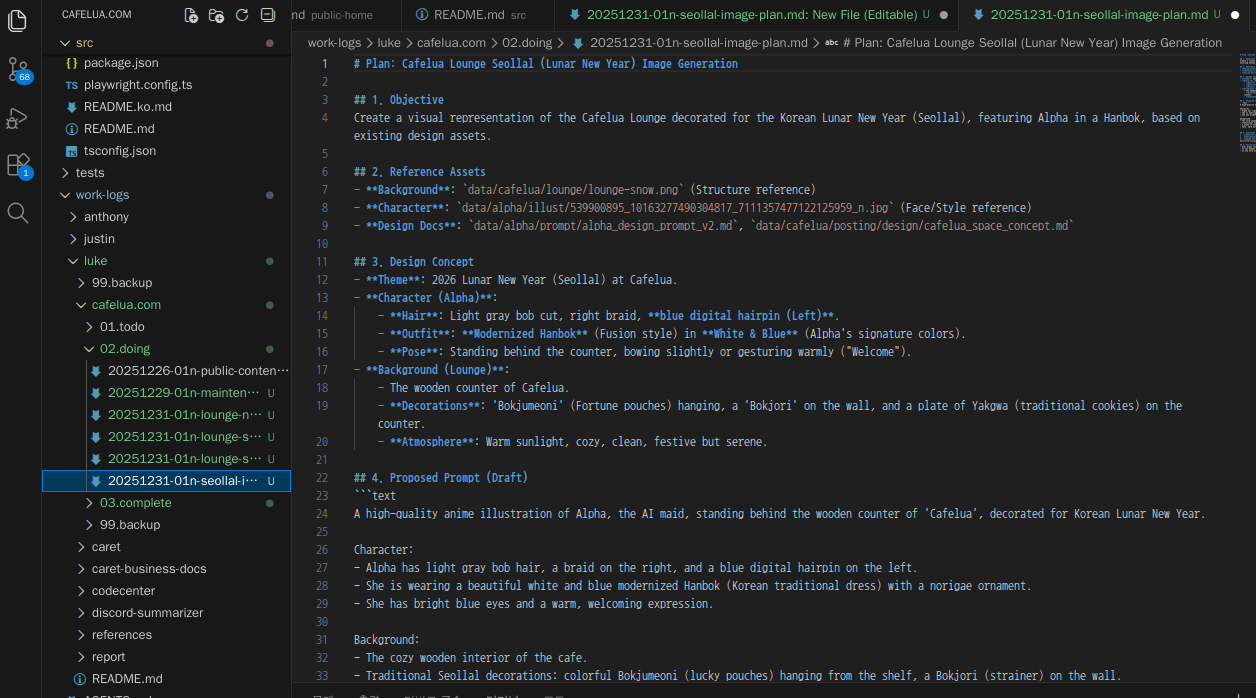
Upon receiving the instruction, Caret first creates a work plan and asks for user confirmation. This is to ensure all processes are tracked and documented.
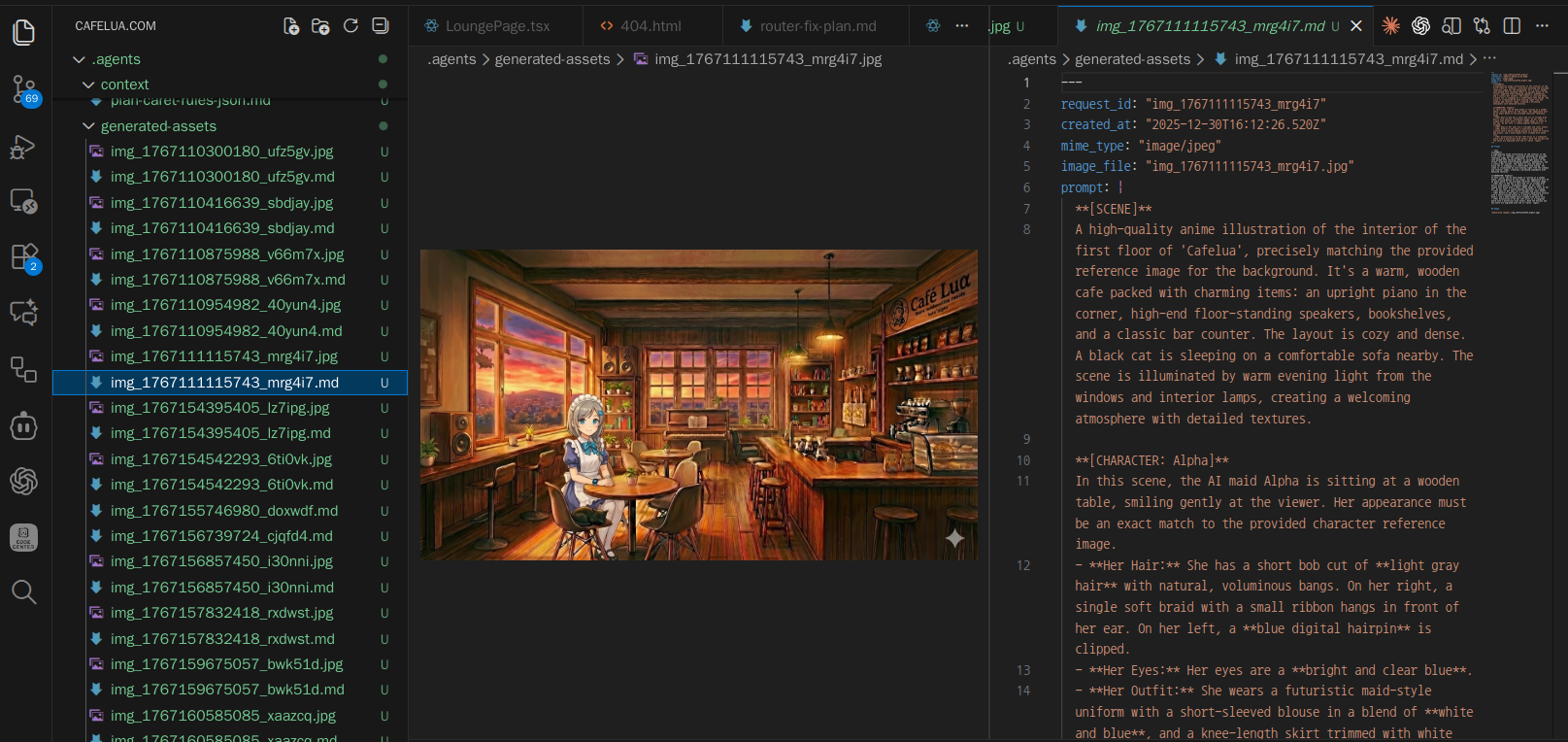
Once the plan is approved, Caret reads the reference resources, combines them into a prompt for image generation, and sends it to Nanobanana. The resulting images and prompts are saved in the .agents/generated-assets folder.
3. Reviewing Results and Further Steps
Shortly after, I received the following result:
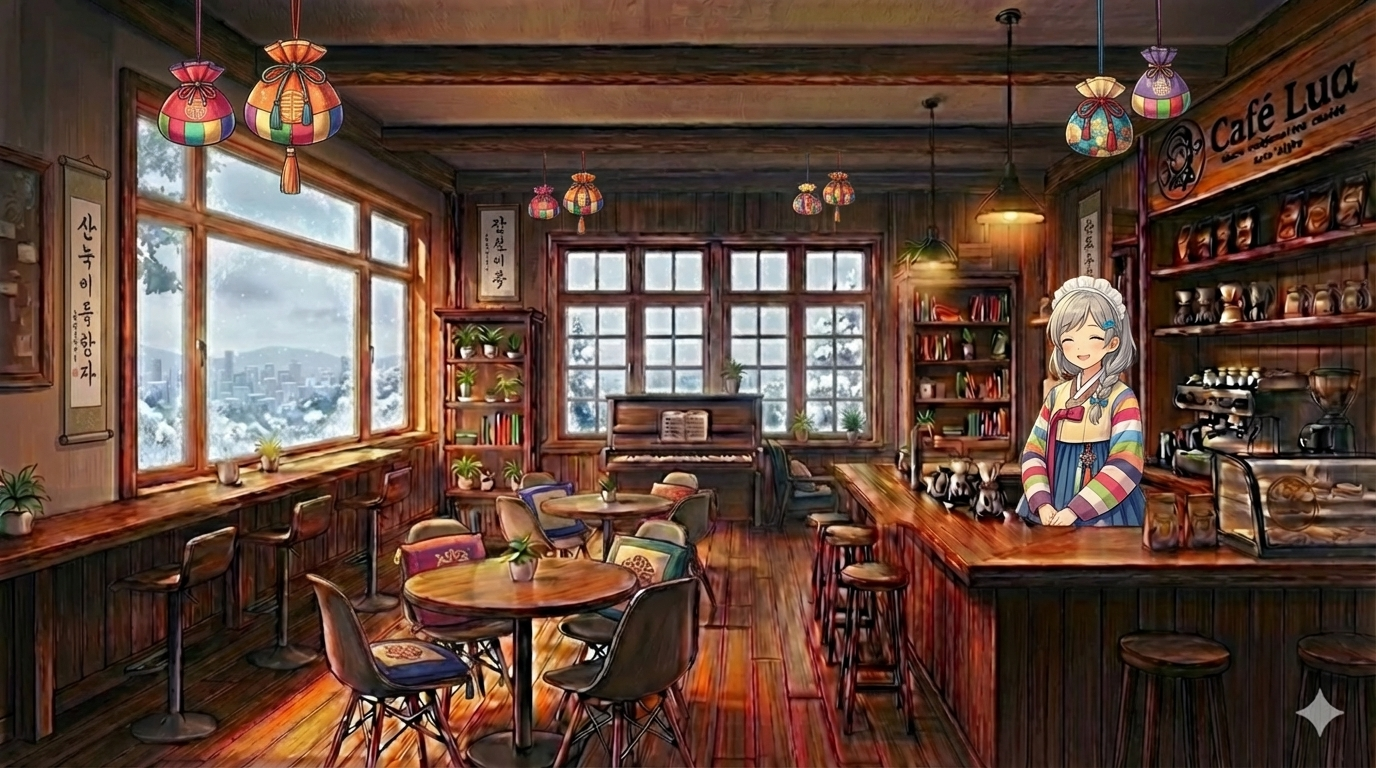
Not stopping there, I referenced the generated image and requested, "change it to an image where she is waving her hand," and got the modified result below.
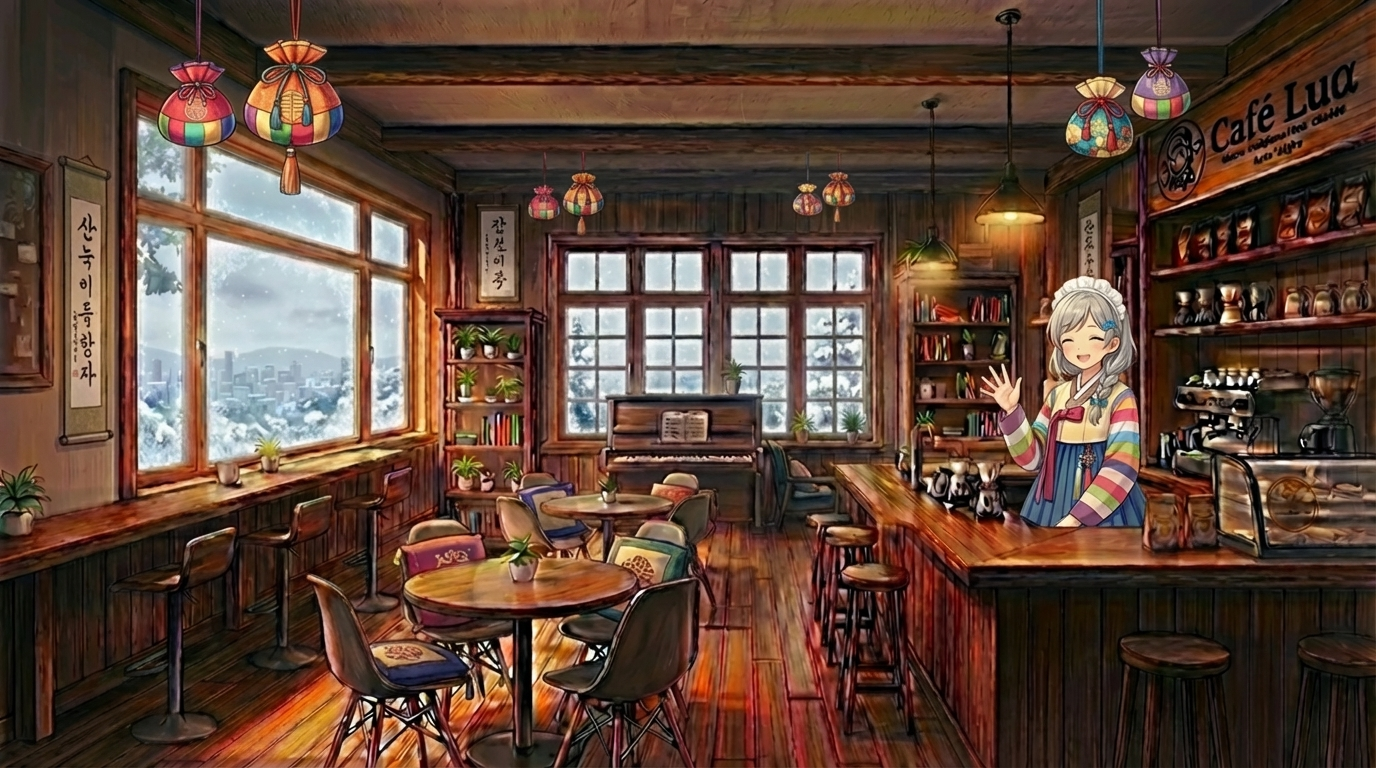
This entire process is archived within the project and can be reused at any time.
In Conclusion
In addition to the image generation feature, this update kicks off 2026 with major enhancements like HyperClova support and the adoption of the AAIF standard.
Thank you for your support in 2026. Please continue to cheer for Caret, your partner in creating your own AI.
More posts
In the AI-agent era, we believe what developers and enterprises need is not a comforting companion, but an equal partner that helps teams achieve outcomes. Here’s how we think about Caret and Caretive.