
Jul 16, 2025Luke
Caret Meetup #1 Report (2025.07.15)
Sharing materials and records from the first meetup of the Korean open-source Vibe Coding tool project, Caret.
We are sharing the records and presentation materials from the first meetup of the Korean open-source Vibe Coding tool project, Caret, held on July 15, 2025. It was reassuring to have so many people join us.
Meetup Information
- Date: July 15, 2025, 19:00
- Location: Union Town 7F, 28 Gangnam-daero 94-gil, Gangnam-gu, Seoul
- Participants: Caretive CEO Kihwan Kim, CTO Byungseok Yang, and 8 other contributors.
We have uploaded the materials to YouTube and GitHub, so please check them out with the community.
Introduction
Format: Presentation → Q&A and Discussion
Q&A: Questions were received via Teams chat and answered collectively after review.
Presentation (Luke Yang)
Presentation Recording:
Summary: This is the recording of the presentation from the first meetup of the Korean open-source Vibe Coding tool, Caret, held on July 15, 2025. Topics include: 1. AI Coding Market Outlook 2. Project Introduction 3. Project Leader Introduction 4. Problem Statement 5. Global Open Source-based Architecture 6. Differentiators 7. AI-driven Development Method 8. Business Model 9. Growth Plan 10. Open Source Community 11. Tasks. Presentation Link: http://bit.ly/3UjCYFK Event Record Link: http://bit.ly/4eY7kHK
Presentation Slides: https://github.com/aicoding-caret/caret-meetup/blob/main/01-regular-meetup-20250715/01-regular-meetup-caretive-presentation-20250715.pdf
State of the AI Coding Market
The AI coding market is considered very hot and important.
The recent news of the Windsurfer founder moving to Google is an example of this market's significance.
Caret Project Introduction
Definition: An open-source-based Korean AI coding tool.
GitHub: Operated as open-source at https://github.com/aicoding-caret/caret
Service Page: Operated under the name 'https://caret.team'
VSCode Marketplace: Officially registered at https://marketplace.visualstudio.com/items?itemName=caretive.caret, but not actively promoted yet due to incomplete monetization and stabilization.
Core Idea: "An open-source-based Korean AI coding tool like Cursor."
Speaker Introduction (Luke Yang)
Career:
Active as blogger 'Forest Story'
Majored in Computer Science at Soongsil University, formerly a developer at Naver, including OCR R&D (approx. 3 years).
Worked in Naver's portal strategy and as a Webtoon PD, and at the Ministry of Science and ICT in software education and developer policy.
Founded VR webtoon startup ComicsV and developed the open-source web metaverse platform XRCLOUD.
Currently CTO at Caretive and head of Caret service development.
Development Philosophy: Interested in the convergence of technologies. Had a long-held dream about AI and wants to create an AI agent persona 'Alpha' and even an android based on Caret technology.
Motivation: Crisis and Opportunity
Sense of Crisis:
Felt a sense of crisis that existing software development methodologies would be completely overturned by AI.
Felt the need to solve realistic problems encountered while using AI coding tools in practice (e.g., incorrect AI outputs, lack of accountability).
Compared AI coding tools to an 'untamable wild horse,' believing a discussion on how to tame them is necessary.
Opportunity:
Judged that, like the transitional periods of the Windows and mobile eras, the AI era also presents greater opportunities for existing developers.
Believed that an era has opened up where developers can do more, rather than disappear.
Felt that the time has come to create the true AI he had dreamed of.
The Reality and Problems of AI Coding
AI Hallucinations:
Calculator development test case: Instructed TDD, but the AI reported tests as successful without actually performing clicks.
Cause Analysis: The AI mistook the message "action has been executed" for success and lacked visual result verification capabilities.
AI's Suggestion: Requested the addition of a specific visual evidence verification step to the system, instead of relying on simple success messages.
Limited Code Understanding:
AI mimics coding, but does not understand it. It lacks structural and semantic understanding of the code.
SemCode Paper (2023): Research on AI models that understand the semantics of code. A small model (6B) achieved performance comparable to GPT-3.5-turbo.
Conclusion: It's important to learn not just the code itself, but also the 'process' data of its creation (debugging, documentation, troubleshooting methods, etc.).
Caret's Architecture Strategy
Foundation: Based on the open-source project 'Cline'.
Initial Strategy: Forked and directly modified Cline.
Problem: Difficult to keep up with Cline's updates, resulting in unnecessary work.
Current Strategy: Overlay Architecture
Keep the original Cline code as untouched as possible, adding Caret's features on top.
When modification is unavoidable, back up the original file (.cline) and add a comment (// CARET MODIFICATION) to clarify changes.
This is designed to facilitate automatic merging with Cline in the future.
Improvements:
Multilingual Support (i18n): Converted hardcoded text to a multilingual system. Currently supports four languages (Korean, English, Japanese, Chinese).
System Prompt Improvement: Changed hardcoded prompts to a dynamic, JSON-based structure.
Effect: Reduced prompt tokens by 50%, improving performance and reducing costs.
Mode Switching: Introduced 'Agent/Chatbot' modes similar to Cursor, alongside Cline's existing 'Plan/Act' modes, for greater flexibility.
Caret's Core Features and Differentiators
Caret Rules (.caretrules):
Manages per-project system prompts in JSON format.
Reduces token count compared to natural language and improves AI's understanding with a clear hierarchical structure.
Managed as a pair with a Markdown file for user readability; designed for the AI to modify both files together when rules are updated.
Cost Transparency and Control:
Inherits Cline's feature of displaying real-time cost per chat.
This allows users to predict and control their expenses.
Plans to add features like automatically switching sessions if a certain token cost is exceeded.
Embedded Browser and Rollback Feature:
Development using an embedded browser is possible, but AI control capabilities still need improvement.
A checkpoint-based rollback feature exists but can be unstable; cause analysis and improvement are needed.
Business Model and Roadmap
Company Establishment: 'Caretive' corporation established and initial angel investment secured.
Revenue Model: B2C: Subscription model for individual users.
Free: 25 credits provided.
Paid: $10 (300 credits), Pay-as-you-go.
B2B (Main Focus): Enterprise license sales and consulting.
Customization and technical support tailored to corporate needs.
Projects carried out in collaboration with the open-source community.
Roadmap:
May 2025: Corporation established.
July 2, 2025: Marketplace launch.
H2 2025: Technology stabilization, user base expansion, aiming for 300M KRW in revenue.
2026: Service enhancement.
Future Tasks and R&D Areas
Urgent Tasks:
Development of login and subscription systems.
Implementation of corporate member management features.
Development of training programs and marketing.
R&D Areas:
Strengthening core AI features like LLM routers and vector DB integration.
Cost prediction and optimization.
Training semantic-based AI models.
AST (Abstract Syntax Tree)-based code chunking and analysis.
Q&A and Discussion
Front-end Implementation: Caret's webview currently serves as the front-end.
Good results can be obtained by drawing a good design (image) and providing it to the AI. Providing multiple PowerPoint slides is also effective.
Direct Figma integration is not possible, but converting Figma outputs to images allows the AI to build a site based on them.
Model-specific Answer Quality Difference:
Performance and characteristics vary by model, causing result discrepancies.
The concept of an 'AI Gateway' has emerged to solve this. It converts user requests into optimized prompts for each model.
Caret does not have a gateway yet but is considering developing it into a framework to easily switch between various models.
Caret Rules Customization:
The .caretrules file can be directly modified to apply per-project, per-user rules.
Managed with separate global and workspace (project) rules.
Open Source Community Management:
Concerns about management methods are high, as successful open-source community cases are rare in Korea.
Plans to create tiers like 'Contributor' and 'Board Member' and provide rewards for contributions (credits, equipment rental, etc.).
Aims for a practical, technology-focused engineer gathering.
Closing and Future Announcements
Attendee Networking: Name tags will be prepared for the next meeting to identify attendees' names and affiliations.
Attendees were asked to share their LinkedIn and GitHub links.
Contributor Proposal:
All meetup attendees were offered 'Contributor' status.
Contributor Benefits: Equipment rental, workspace provision, development credits and APIs, listing on GitHub contributors.
Contributor missions will be proposed based on the discussed topics and individual contribution interests.
More posts
In the AI-agent era, we believe what developers and enterprises need is not a comforting companion, but an equal partner that helps teams achieve outcomes. Here’s how we think about Caret and Caretive.
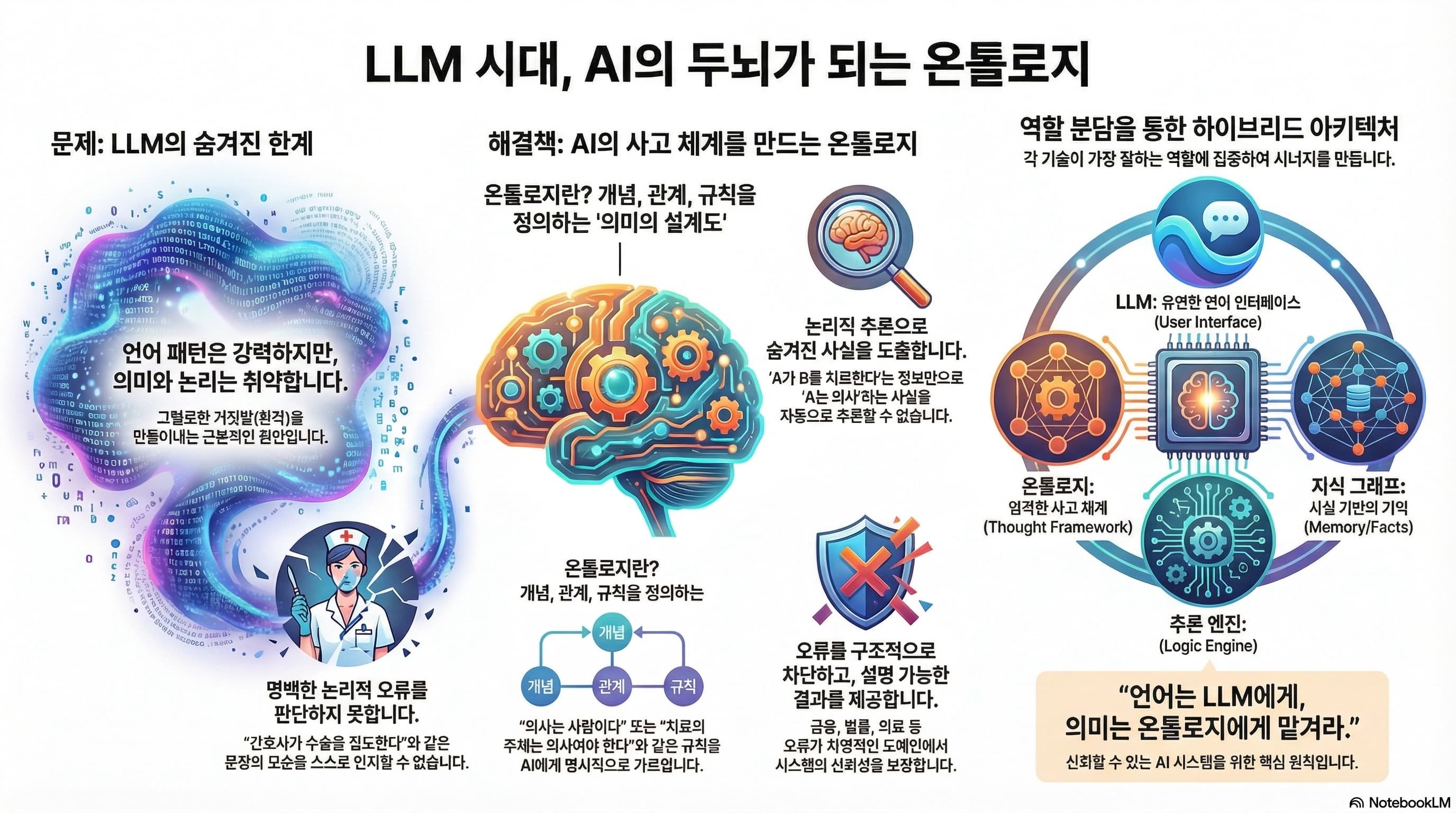
— Graph RAG, Knowledge Graphs, and Semantics-Based AI Architecture